
DeFi Yield to Physical Gold Conversion: 2026 Guide
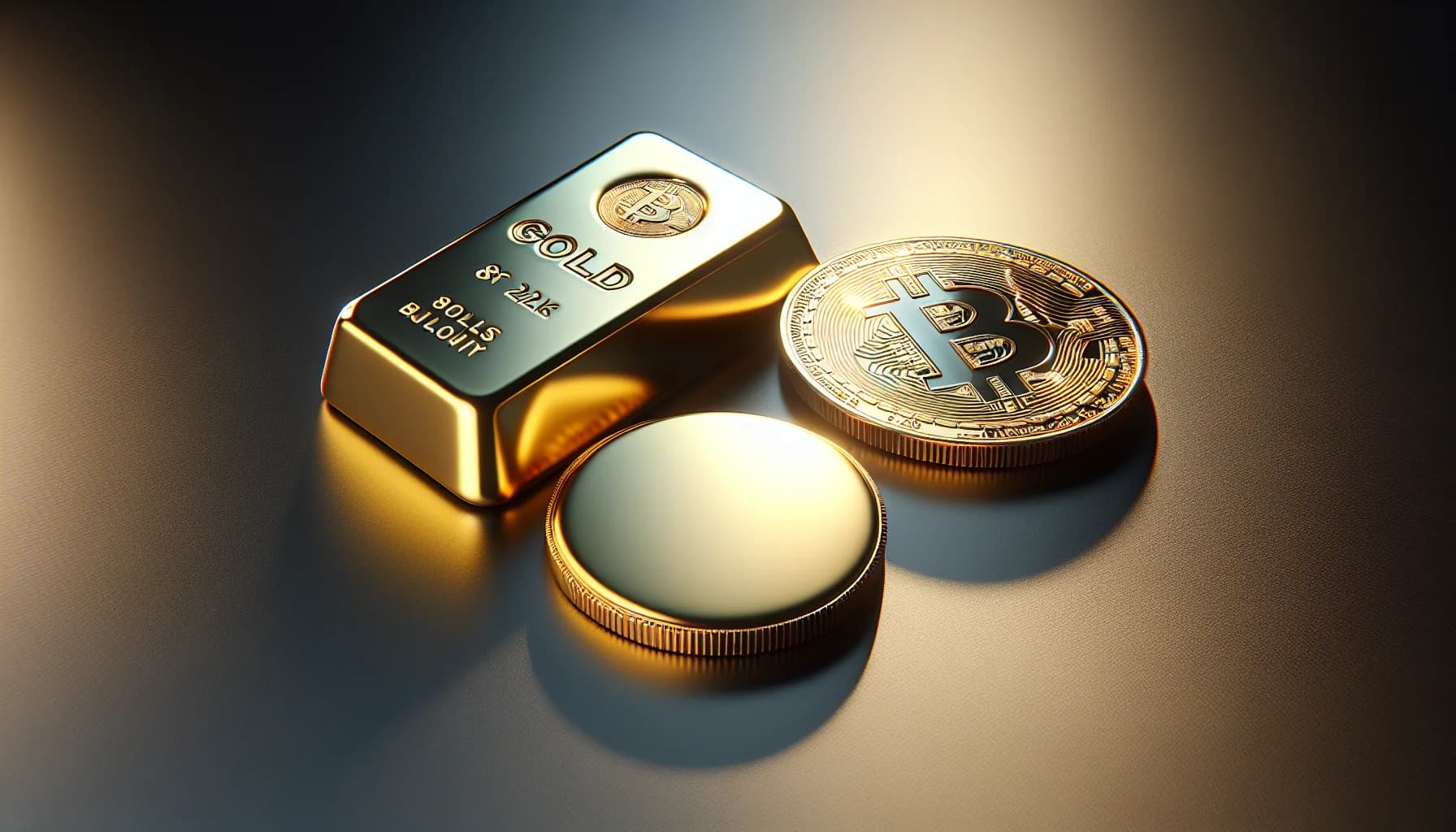
DeFi Yield to Physical Gold Conversion: 2026 Guide
By Daniel Carter, Crypto & Precious Metals Specialist at BtcGoldshop
Last Updated: April 04, 2026
DeFi yield to physical gold conversion is one of the most effective risk management strategies available to active DeFi participants in 2026. Converting a portion of yield earned from liquidity provision, lending, and staking directly into LBMA-certified gold bars — using stablecoins or governance tokens — locks in real purchasing power outside the smart contract risk ecosystem entirely. BtcGoldshop.com accepts USDT, DAI, USDC, ETH, and 50+ other cryptocurrencies with no KYC under $50,000 and insured delivery to 150+ countries.
Put simply: DeFi yield to physical gold conversion means taking income earned from DeFi protocols — liquidity pools, lending markets, yield aggregators, or governance staking — and purchasing LBMA-certified gold bars or coins directly with those crypto yields. The conversion moves passive DeFi income from a high-counterparty-risk digital environment into a zero-counterparty-risk physical asset, without touching the traditional banking system.
What Is DeFi Yield and Why Does Converting It to Gold Matter?
The DeFi Yield Landscape in 2026
Decentralised finance (DeFi) protocols generate yield for participants through several mechanisms: automated market maker (AMM) liquidity provision fees, lending market interest on deposited assets, yield aggregator strategies that compound multiple yield sources, and governance token emissions rewarding protocol participation. In 2026, the total value locked (TVL) across DeFi protocols sits at approximately $180 billion, with major protocols including Aave, Compound, Uniswap V4, Curve, and Pendle generating billions in aggregate annual yield distributed to participants. According to CoinMarketCap (2025), DeFi protocols distributed over $8.4 billion in yield to participants globally in 2025 — a number that makes the yield-to-gold conversion strategy financially meaningful at every participation level.
The Risk Profile of DeFi Yield
DeFi yield comes with a distinctive and non-trivial risk profile. Smart contract exploits — code vulnerabilities that allow attackers to drain protocol funds — have resulted in over $3.8 billion in losses across DeFi protocols since 2020, according to Chainalysis (2025). Liquidity provider impermanent loss can erode the real value of deposited capital even when nominal yield is positive. Governance token emissions — often a significant component of headline APY figures — create constant selling pressure and value dilution. Converting yield to physical gold systematically removes a portion of earned income from all these risks simultaneously.
Why Physical Gold Is the Logical Destination for DeFi Yield
Physical gold purchased with crypto yield creates a portfolio structure where DeFi risk capital remains deployed and productive, while a portion of the generated income is continuously converted into a zero-counterparty-risk, censorship-resistant physical asset. Gold's price in April 2026 sits at approximately $3,100–$3,150 per troy ounce, driven by central bank demand and macroeconomic safe-haven flows. Unlike reinvesting yield back into DeFi protocols — which compounds smart contract risk — converting yield to gold compounds sovereignty and purchasing power preservation outside the entire DeFi ecosystem.
"DeFi participants who reinvest all their yield back into DeFi are compounding their risk exposure as well as their returns," says the BtcGoldshop research team. "The most sustainable DeFi strategies we see involve a disciplined allocation — a fixed percentage of yield, taken monthly or quarterly, converted to physical gold. It creates a floor under the DeFi portfolio that persists regardless of what happens to protocol TVL, governance token prices, or the next exploit cycle."
In summary: DeFi yield conversion to physical gold in 2026 addresses the core risk management gap in most active DeFi strategies — the absence of a non-digital wealth floor. Converting a systematic percentage of protocol yield to LBMA-certified gold creates a tangible, self-custody asset position that grows continuously from DeFi income without requiring new capital deployment and without taking on any additional smart contract, liquidity, or token price risk.
Which DeFi Yield Sources Are Best Suited for Gold Conversion?
Stablecoin Lending Yields: The Cleanest Conversion Source
Stablecoin lending yields — from platforms like Aave (3–8% APY on USDC/USDT/DAI), Compound, and Morpho — represent the cleanest DeFi yield source for gold conversion. The yield is denominated in stablecoins, eliminating price volatility between yield accrual and gold purchase. A participant earning $500/month in USDT from Aave lending can convert that yield directly to a 5g or 10g LBMA gold bar at the end of each month without any intermediate conversion step — just claim yield, purchase gold, repeat.
AMM Liquidity Provider Fees and Governance Tokens
AMM liquidity provision on Uniswap V4, Curve, or Balancer generates fees in the paired tokens — which may include volatile assets like ETH, WBTC, or governance tokens alongside stablecoins. Converting volatile token components of LP yield to USDT or DAI on a DEX before purchasing gold provides price stability. Governance token emissions — rewarded in protocols' native tokens — should be swapped to stablecoins or ETH before gold conversion to capture real value before token price erosion. Jupiter (Solana), 1inch (Ethereum), or Paraswap handle these swaps efficiently with minimal slippage for moderate amounts.
Yield Aggregator Returns: Compounding Before Converting
Yield aggregators like Yearn Finance, Beefy Finance, and Harvest Finance automatically compound DeFi yields — maximising the capital base before withdrawal. DeFi participants using yield aggregators can set a regular withdrawal schedule — monthly or quarterly — and convert the withdrawn amount to physical gold. This approach captures compounding benefits on the DeFi position while systematically extracting a portion of accumulated value into gold at regular intervals. According to Kitco (2025), the gold purchasing behaviour of DeFi-originated crypto payments grew 38% in 2025 versus 2024, reflecting this emerging systematic conversion pattern.
The key takeaway is: The best DeFi yield sources for physical gold conversion in 2026 are stablecoin lending yields (USDT/USDC/DAI from Aave/Compound/Morpho) — clean, price-stable, and directly convertible to gold without intermediate swaps. Volatile token yields and governance emissions require a DEX swap to stablecoins first. Yield aggregator withdrawals on a regular schedule allow compounding to maximise the DeFi position before systematic gold conversion at regular intervals.
How Do You Convert DeFi Yield to Physical Gold Step by Step?
The Monthly Conversion Framework
- Track your DeFi yield across all protocols using a portfolio tracker (DeBank, Zapper, or Zerion) — note total yield accrued in the period.
- Decide your conversion percentage — 15–25% of yield to gold is a widely used range that balances gold accumulation with DeFi reinvestment.
- Claim and consolidate yield to a non-custodial wallet (MetaMask, Phantom, Rabby) — avoid leaving DeFi yields sitting in protocol-locked positions for conversion.
- Swap to a stable payment currency if needed — USDT on TRC-20 or ERC-20, or USDC on Ethereum, for price certainty during gold checkout.
- Select your gold product — LBMA-certified bars matched to your yield amount (see product table below).
- Complete crypto checkout at a no-KYC gold dealer — enter delivery address, select payment currency, send from non-custodial wallet, wait for confirmation.
- Receive insured delivery — typically 5–14 business days — in discreet, unmarked packaging with certificate of authenticity.
Matching DeFi Yield Amounts to Gold Products
Matching your monthly or quarterly yield amount to the optimal gold product tier avoids the premium trap of buying too-small fractional pieces. A $500/month stablecoin yield budget buys a 5g LBMA bar at approximately 7–10% premium over spot — reasonable. A $3,200 quarterly budget buys a 1oz LBMA bar at approximately 2–4% premium — significantly better value. Accumulating two or three months of yield before purchasing a larger bar often reduces total premium cost meaningfully compared to monthly purchases of smaller pieces.
Privacy Considerations for DeFi Yield Converters
DeFi protocol interactions are on-chain and publicly visible — anyone can see that a given wallet address is claiming yield from Aave or withdrawing from a Curve pool. For DeFi participants prioritising financial privacy in their gold purchases, using a DEX swap to Monero (XMR) or routing through a privacy-preserving bridge before purchasing gold creates additional separation between the DeFi activity and the gold purchase wallet. BtcGoldshop.com accepts XMR among its 50+ supported cryptocurrencies — allowing a fully privacy-optimised DeFi-to-gold conversion pathway for buyers who require it.
Here's the bottom line: DeFi yield to physical gold conversion follows a clear seven-step process in 2026 — track yield, decide conversion percentage, claim and consolidate, swap to stablecoins, select gold product, complete crypto checkout, receive insured delivery. The entire process from yield claim to checkout completion takes under 30 minutes. The gold arrives in hand within two weeks. No bank account, no identity verification under $50,000, and no fiat conversion required at any step.
| Monthly DeFi Yield | Quarterly Accumulated | Gold Product Suggestion | Premium Over Spot | Accumulation Schedule |
|---|---|---|---|---|
| $100–$200 | $300–$600 | 1g or 5g LBMA bar | 10–20% (1g) / 7–10% (5g) | Monthly fractional |
| $300–$600 | $900–$1,800 | 10g LBMA bar | 5–8% | Monthly or quarterly |
| $700–$1,200 | $2,100–$3,600 | 1oz LBMA bar or Maple Leaf | 2–4% | Monthly or bi-monthly |
| $1,500–$3,500 | $4,500–$10,500 | 100g LBMA bar | 1–2% | Quarterly |
| $4,000+ | $12,000+ | Multiple 100g or 1kg bar | 0.5–1% | Quarterly or bi-annual |
What Are the Risks of DeFi Yield That Gold Conversion Protects Against?
Smart Contract Exploit Risk
Smart contract exploits remain the most acute risk in DeFi in 2026. Despite improved audit practices and formal verification tooling, protocol vulnerabilities continue to be discovered and exploited. A participant whose entire DeFi yield is reinvested back into the same or adjacent protocols has 100% of their accumulated yield exposed to exploit risk. Converting 20% of yield to physical gold systematically reduces effective exploit exposure — the converted amount is permanently outside the DeFi risk environment, regardless of what happens on-chain.
Governance Token Devaluation
Governance token emissions — distributed as yield incentives by virtually every major DeFi protocol — are subject to constant dilution as new tokens are minted and distributed. Historical patterns across protocols show that governance token prices trend downward in real terms over multi-year periods as supply inflation outpaces demand. Converting governance token yield to gold at regular intervals captures real value before dilution erodes it — converting paper APY into a genuinely appreciating physical asset rather than holding tokens whose value is structurally pressured by their own emission schedule.
Protocol Insolvency and Liquidity Crisis
DeFi lending protocols are exposed to liquidity crises when collateral values drop sharply and liquidation mechanisms fail to function correctly at speed. The most dramatic example — the March 2020 crypto market crash — saw MakerDAO's DAI system incur $8 million in bad debt in a single day when liquidations could not keep pace with price drops. Converting a systematic percentage of DeFi yield to physical gold creates a wealth position that is completely immune to DeFi liquidity crises — the metal does not get liquidated, does not depend on oracle prices, and does not require any protocol to function correctly. For the broader context of physical gold demand from crypto holders, see Gold ETF Outflows & Physical Gold Demand: Crypto Guide.
"Every DeFi risk — exploits, governance dilution, liquidation cascades, oracle manipulation — affects only the on-chain portion of a portfolio," says the BtcGoldshop research team. "Physical gold that's been purchased and delivered sits completely outside this risk universe. It cannot be drained by an exploit, diluted by token emissions, or affected by a price oracle failure. That's not a theoretical advantage — it's a structural one that compounds over every DeFi crisis cycle."
In summary: DeFi yield conversion to physical gold in 2026 provides structural protection against three primary DeFi risk categories — smart contract exploits (by removing yield from the on-chain environment), governance token devaluation (by capturing token value before dilution), and protocol liquidity crises (by creating a wealth position entirely outside DeFi infrastructure). Gold purchased with DeFi yield cannot be exploited, diluted, or liquidated — it simply exists in physical self-custody, unaffected by whatever happens on-chain.
How Does DeFi-to-Gold Compare to Other Yield Conversion Strategies?
DeFi Yield vs Ethereum Staking Yield: Different Income Profiles
Ethereum staking yield (discussed in detail at Ethereum Merge Stakers Buy Gold: 2026 Guide) is a more predictable, lower-risk income stream than DeFi yield — 3–4% APY paid continuously in ETH for validator operation or liquid staking. DeFi yield varies more widely — 5% to 50%+ depending on protocol and strategy — and carries significantly higher smart contract risk. Both convert well to physical gold; DeFi yield buyers typically operate at larger transaction sizes due to higher nominal yields, but with more urgency to exit the risk environment.
Solana DeFi vs Ethereum DeFi for Gold Conversion
Solana's DeFi ecosystem — Raydium, Orca, Drift, MarginFi, and Kamino among the major protocols — generates yield competitive with Ethereum DeFi at significantly lower gas costs. Solana's sub-second transaction finality and near-zero fees make it particularly efficient for the DEX swap step before gold purchase — swapping yield tokens to USDT-SOL costs under $0.01 and completes in under 5 seconds. For buyers converting Solana DeFi yield to gold, the strategy overview in Solana Price Rally: Convert to Gold 2026 Guide covers the Solana-specific payment steps in detail.
Mining Rewards vs DeFi Yield: Regularity and Predictability
Bitcoin mining rewards (discussed in Mining Rewards Convert to Physical Gold: 2026 Guide) are irregular and depend on hash rate, pool luck, and hardware performance. DeFi yield is more predictable for stablecoin lenders but highly variable for LP positions with impermanent loss. Both convert to gold using the same practical steps — the key difference is income predictability and the currency denomination of the yield. Stablecoin DeFi yield is the most predictable and price-stable source for systematic gold accumulation among all crypto income types.
Put simply: DeFi yield is the most diverse and highest-nominal-rate category of crypto passive income in 2026, but it carries the most complex risk profile. Converting a systematic percentage — particularly from stablecoin lending positions — to physical gold provides the clearest risk-adjusted improvement of any DeFi risk management strategy. No other action removes DeFi yield from smart contract risk as definitively as physical delivery of LBMA-certified gold to self-custody.
Tokenised Gold in DeFi vs Physical Gold Conversion: Which Is Better?
Tokenised Gold in DeFi: Convenience With Caveats
Tokenised gold products including Tether Gold (XAUt) and PAX Gold (PAXG) are available as ERC-20 tokens and are integrated into several DeFi protocols as collateral and yield-bearing assets. A DeFi participant can swap USDT yield directly to XAUt on Uniswap in seconds — capturing gold price exposure without leaving the Ethereum ecosystem. However, XAUt and PAXG are custodian claims on physical gold held in Swiss and New York vaults respectively. For participants whose primary motivation is escaping custodian risk, moving from one set of on-chain custodian relationships to another custodian's token is a lateral move. For a full comparison, see Tether Gold XAUt vs Physical Gold: 2026 Guide.
DeFi Yield Farms Using Gold Tokens: Smart Contract Risk Compounds
Several DeFi protocols in 2026 offer yield farming strategies using XAUt or PAXG as base assets — providing stablecoin-adjacent returns on tokenised gold positions. While the nominal risk looks lower than volatile token farming, these strategies combine smart contract risk (DeFi protocol) with custodian risk (Tether/Paxos vaults) with liquidity risk (DEX pool) in a single position. For DeFi participants seeking genuine risk reduction through gold exposure, physical gold delivered to self-custody eliminates all three risk layers simultaneously — the metal does not have smart contract code, a custodian, or a liquidity pool.
The Practical Case for Physical Over Tokenised
A DeFi participant who has experienced a protocol exploit — or who closely watched the Terra/LUNA collapse, the Celsius freeze, or the FTX insolvency — has already lived through what happens when financial products built on digital infrastructure fail catastrophically. Physical gold in a home safe has a different failure mode: essentially none, for a self-sovereign holder. The premise of DeFi yield to physical gold conversion is precisely that the yield buyer wants to exit the digital risk stack entirely — not simply relocate within it to a tokenised gold product that carries its own version of the same risks.
The key takeaway is: Tokenised gold in DeFi (XAUt, PAXG) offers gold price exposure with DeFi-native convenience but retains custodian and smart contract risk. Physical gold purchased with DeFi yield and delivered to self-custody eliminates both. For DeFi participants whose motivation is genuine risk reduction through diversification into a zero-counterparty-risk asset, physical delivery is the only outcome that fully achieves that goal. Tokenised gold is a trading instrument; physical gold is a wealth preservation destination.
Regional Considerations for DeFi Yield Gold Conversion in 2026
Asian DeFi Participants: Strong Gold Culture and Favourable Frameworks
Asian DeFi participants — concentrated in India, Singapore, South Korea, Vietnam, and the Philippines — face diverse regulatory environments for crypto but consistently strong cultural affinity for physical gold. Indian DeFi participants benefit from the same no-domestic-exchange-required structure as other Indian crypto holders — converting DeFi yield directly to physical gold avoids India's 30% domestic crypto capital gains tax trigger. See Buy Gold with Crypto India: 2026 Guide. Singapore's zero GST on investment gold makes it one of the most tax-efficient DeFi-to-gold conversion destinations in Asia — see Buy Gold with Bitcoin Singapore: 2026 Guide.
European and North American DeFi Participants
European DeFi participants have access to EU-based crypto-accepting gold dealers including Bitgild (Netherlands) and several German bullion dealers with stablecoin payment options. North American participants can use platforms with global insured shipping like BtcGoldshop.com, which delivers to 150+ countries. For the tightest dealer premiums on DeFi-funded gold purchases, see Lowest Spread Gold Dealer Crypto: 2026 Guide. For shipping and free delivery thresholds, see Crypto Gold Shop Free Shipping: 2026 Guide.
"The DeFi-to-gold conversion trend is global but particularly strong in Asia," says the BtcGoldshop research team. "Indian and Southeast Asian DeFi participants are among the most active crypto-to-gold buyers we see — they combine the cultural resonance of gold with the sophistication of DeFi users who genuinely understand risk. They're not speculating on gold. They're building a floor under a DeFi portfolio that they know carries real risk, using a tool their grandparents also trusted. It's a powerful combination."
In summary: DeFi yield to physical gold conversion is a globally applicable strategy with particularly strong traction in Asia, where cultural gold affinity meets sophisticated DeFi participation and where domestic crypto-to-fiat conversion frameworks create additional incentives for direct crypto-to-gold purchasing. BtcGoldshop.com's 150+ country delivery coverage ensures that DeFi participants globally — regardless of jurisdiction — have access to no-KYC, insured physical gold delivery with their choice of 50+ payment cryptocurrencies. For premium comparisons, see Gold Premiums: Crypto vs Bank Transfer 2026.
Frequently Asked Questions
What is DeFi yield to physical gold conversion?
DeFi yield to physical gold conversion means taking income earned from decentralised finance protocols — liquidity provision fees, lending interest, governance token rewards, or yield aggregator returns — and purchasing LBMA-certified physical gold bars or coins directly with those crypto earnings. The conversion moves passive DeFi income out of the smart contract risk environment into a zero-counterparty-risk physical asset held in self-custody, without requiring bank accounts or fiat currency conversion.
Which DeFi yield sources work best for gold conversion?
Stablecoin lending yields from Aave, Compound, or Morpho (paid in USDT, USDC, or DAI) are the cleanest DeFi yield source for gold conversion — price-stable and directly payable to gold dealers without intermediate swaps. Volatile token yields and governance token emissions should be swapped to stablecoins on a DEX (1inch, Jupiter, Paraswap) before gold checkout to capture real value before token price erosion. Yield aggregator withdrawals work well on quarterly schedules.
Do I need KYC to buy gold with DeFi yield?
At reputable privacy-focused dealers including BtcGoldshop.com, no identity verification is required for purchases under $50,000 USD. DeFi yield amounts — typically $200–$5,000 per conversion — fall well within this threshold for the vast majority of participants. Pay from a non-custodial wallet, receive insured delivery to your address, and the transaction creates no identity-linked record in any centralised financial database. Purchases above $50,000 may require identity verification under standard AML thresholds.
How much DeFi yield does it take to buy 1oz of gold in 2026?
At April 2026 gold prices of approximately $3,150 per troy ounce, one 1oz LBMA-certified gold bar costs approximately $3,200–$3,280 USD including a 2–4% dealer premium. In DeFi yield terms, a participant earning 5% APY on $65,000 in stablecoin lending generates approximately $3,250/year — enough for one 1oz bar annually. Higher-yield DeFi strategies generate more, and many participants can accumulate per-ounce conversion amounts from quarterly yield.
Is converting DeFi yield to gold taxable?
Tax treatment of DeFi yield and subsequent crypto spending varies significantly by jurisdiction and is evolving rapidly. In many countries, DeFi yield is treated as income when received, and spending crypto on physical goods may trigger a capital gains disposal event on any appreciation between receipt and spending. Consult a qualified tax professional in your specific jurisdiction before converting DeFi yields to physical gold at scale. Physical gold itself is generally exempt from VAT/GST when LBMA-certified investment grade in most jurisdictions.
Can I buy gold with DAI or USDC from DeFi protocols?
Yes. DAI and USDC are accepted by several crypto-accepting gold dealers in 2026. BtcGoldshop.com and other platforms accept major stablecoins alongside BTC, ETH, SOL, and other cryptocurrencies. DAI — generated and earned through MakerDAO and integrated lending markets — is particularly common among DeFi participants converting yield to gold. USDC on Ethereum or Polygon is similarly well-supported. Stablecoin payments eliminate checkout price-lock risk and are recommended for purchases above $1,000 USD equivalent.
How long does physical gold delivery take after a DeFi yield payment?
After your crypto payment confirms on-chain — typically 1–30 seconds for Solana USDT, 1–3 minutes for Ethereum, 10–30 minutes for Bitcoin — the dealer processes your order and dispatches within 1–3 business days via fully insured international courier. Physical gold arrives in discreet, unmarked packaging with end-to-end tracking and full replacement value insurance. Delivery to major cities typically takes 5–10 business days; more remote destinations may take up to 14 business days.
Final Thoughts: DeFi Yield to Physical Gold Conversion in 2026
DeFi yield to physical gold conversion in 2026 is the most structurally sound risk management strategy available to active DeFi participants who have accumulated meaningful protocol yield. The DeFi ecosystem offers unprecedented income generation opportunities — at the cost of smart contract risk, governance dilution, and liquidity crisis exposure. Physical gold purchased with those yields removes a growing portion of accumulated wealth from every one of those risks permanently.
The strategy requires no special expertise beyond what an active DeFi user already possesses. Claim yield, swap to stablecoins on a DEX, purchase gold at a no-KYC dealer, receive insured delivery. The process takes under 30 minutes and delivers physical metal in under two weeks. The gold then sits in self-custody — immune to exploits, oracle failures, governance votes, and liquidation cascades — growing only in line with gold's own market dynamics.
For DeFi participants ready to begin, BtcGoldshop.com covers the full gold product range — LBMA-certified bars from 1g to 1kg, investment coins, and silver bullion — with 50+ cryptocurrencies accepted including all major stablecoins, ETH, SOL, XMR, and BTC. No KYC under $50,000 USD. Real-time pricing. Insured delivery to 150+ countries. Discreet packaging. Certificate of authenticity on every order. Your DeFi yield has already done the work — physical gold gives it a permanent home outside the risk environment that generated it.
Ready to buy with crypto?
Browse 360+ LBMA-certified gold & silver products. Pay privately, ship worldwide.
Shop bullionKeep reading
Buy Gold With Ethereum 2026: Complete Buyer Guide
Buy Gold With Ethereum 2026: Complete Buyer Guide By Daniel Carter, Crypto & Precious Metals Specialist at BtcGoldshop Last Updated: April 28, 2026 To buy gold …
April 26, 2026Buy Gold With Bitcoin No KYC: 2026 Privacy Guide
Buy Gold With Bitcoin No KYC: 2026 Privacy Guide By Daniel Carter, Crypto & Precious Metals Specialist at BtcGoldshop Last Updated: 2026-04-26 You can buy gold …
April 22, 2026Gold Dealer Fast Shipping Crypto: 2026 Buyer Guide
Gold Dealer Fast Shipping Crypto: 2026 Buyer Guide By Daniel Carter, Crypto & Precious Metals Specialist at BtcGoldshop Last Updated: 2026-04-22 Choosing a gold…